ServicesRoof Inspections
Roof Inspections in Minco, With Every Finding Made Clear
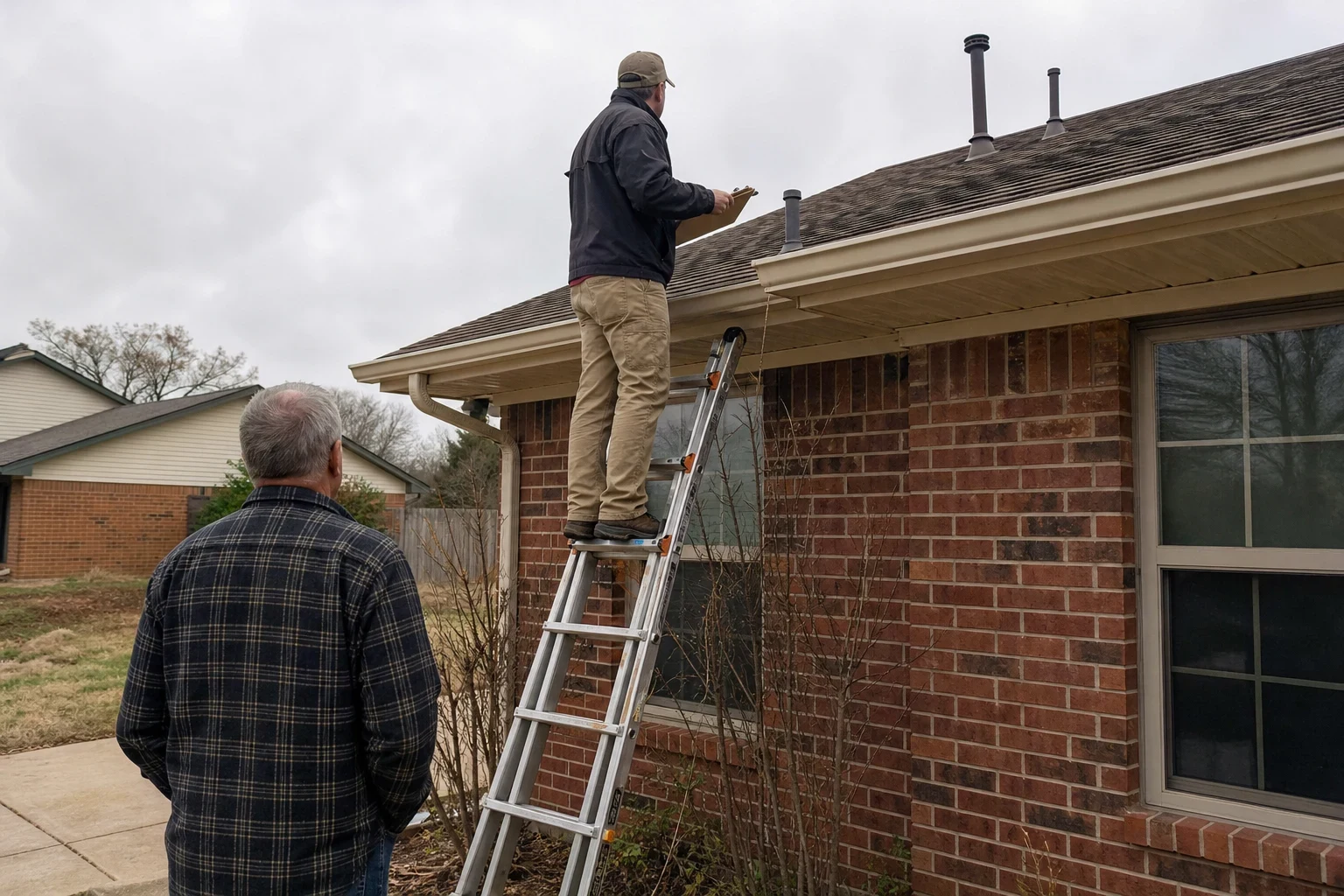
We cover each slope on foot, check the attic from the inside and take photos along the way. Afterward we go over every item with you in plain language: what it is, whether it needs attention now and what your choices are. The next step is yours to decide.
Why a Roof Inspection Is Worth It
Roof trouble usually begins small and silent. A raised shingle tab, a split pipe boot or a loose bit of step flashing can leak for months before any ceiling stain appears. An inspection catches these early, when the repair is still a modest one.
It is also the sensible place to start when something is different. After hail, ahead of buying or selling a home, when an aging roof starts to look worn, or when you just want to know how many good years remain, an inspection replaces guesswork with facts.
Our job is to make what we find easy to follow. We point to the spot in a photo, explain what caused it and tell you whether it calls for a repair, can be watched for now or suggests roof replacement.
What Our Inspection Covers
- Shingle surface and granule cover
- We check for hail bruises, tabs creased or torn away by wind, and patches where granules have worn off. Those granules protect the asphalt from the sun, and an Oklahoma summer is tough on any shingle left bare.
- Flashing and anything through the roof
- Most leaks start at chimneys, skylights, walls, vents and plumbing pipes. We look over step flashing, counterflashing and the rubber pipe boots, which usually crack well before the shingles wear out.
- Ridges, valleys and roof edges
- Valleys handle more water than any other part of a roof, so we look hard for shingles there that are worn or raised. Ridge caps, drip edge and the starter row along the eaves get checked too.
- Attic and decking
- From the attic you can see what shingles cover up. We look at the underside of the boards for stains, soft or dark wood and pinpoints of daylight, and we watch for trapped heat or frost marks that signal poor airflow. The true route of a leak often appears here first.
- Gutters and runoff
- We note sagging sections, loose hangers, blocked downspouts and water running behind the gutter onto the fascia. When drainage is adding to the trouble, we tell you and explain how our gutters work could help.
When a Roof Visit Makes Sense
After hail or high wind
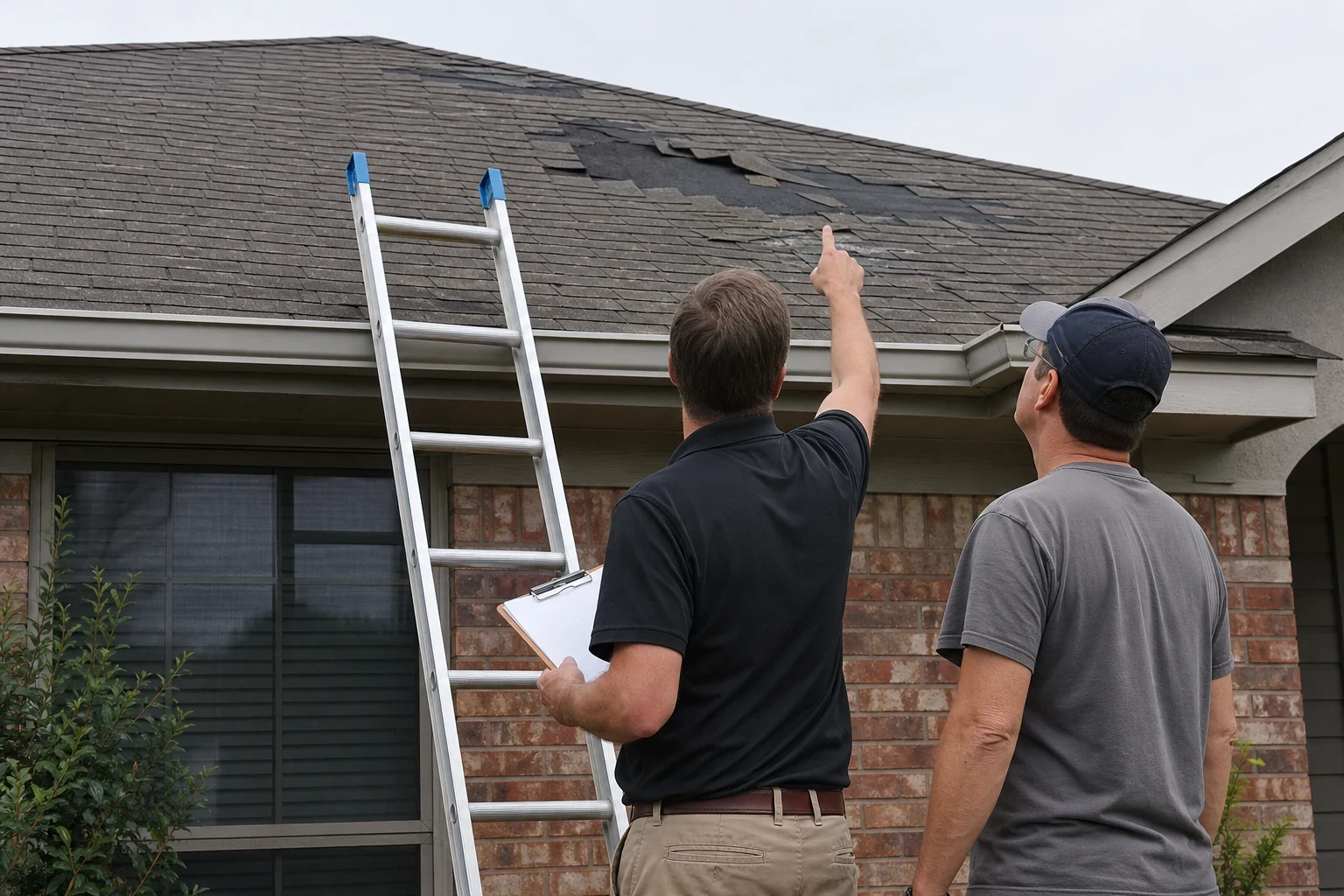
A roof can take a beating that is invisible from the yard. Dents in the gutters, chipped siding paint or dinged outdoor equipment usually mean the shingles were hit as well.
Granules collecting at the downspouts
A handful of grit after a new roof goes on is normal. Steady piles years later usually mean the shingles are wearing through their protective layer.
Stains on ceilings or attic wood
Even a small brown ring means water reached the inside of your home. The source is often several feet uphill from the stain.
Your roof is getting older
Once an asphalt roof has been in place for many years, a regular look helps you plan. Knowing what is coming lets you budget instead of reacting to a leak.
You are buying or selling
A clear picture of the roof's condition helps both sides understand what they are agreeing to, and avoids surprises later.
What Moves the Price of a Roof Inspection
The price comes down to how long a careful look takes on your particular roof and attic. We give you the figure by phone before the visit, so the day itself holds no money surprises.
Size and shape of the roof
A simple gable roof goes quickly. Several valleys, dormers and roof levels mean more flashing to check and more photos to take.
Roof pitch and stories
A low-slope, single-story roof is quick to work across. A steep pitch or a second story calls for more ladder work, harnesses and careful footing, which takes longer without cutting any corners.
Attic access
An open attic with a pull-down ladder is quick. A tight crawlspace or scuttle hole in a closet takes longer to inspect properly.
Reason for the visit
A routine checkup is different from documenting storm damage, which needs closer photography of each slope and each type of impact.
How Inspection Day Goes
- 1
We talk first
When we arrive, we ask what prompted the visit and whether you have noticed leaks, noises or past repairs. That history tells us where to look hardest.
- 2
Roof walk and photos
If the roof is safe to walk, we go up and work through it section by section, photographing anything worth discussing. On steep or fragile roofs we take extra care and say so if a section cannot be walked safely.
- 3
Into the attic
With your permission, we head up through the hatch to check the roof boards from below, the insulation and how air moves through the space. Floors get covered on the way, and the hatch goes back neatly when we finish.
- 4
Findings, in order
We go through the photos with you and sort each item into what needs attention now, what can wait and what is simply normal aging. If a repair makes sense, we describe it, and if it is honestly time to replace, we tell you why.
Roof Inspection Questions
How much time should I set aside?
Plan on roughly an hour for a typical single-story home, attic included. Bigger or steeper roofs run longer. We would rather be thorough than quick, and we will tell you up front if the visit needs extra time.
Do I need to be home?
It helps if you are, at least at the start and end. You can tell us about any history, give us attic access and see the photos while we walk you through them. If that is not possible, we can go over the findings by phone afterward.
Will you just tell me I need a new roof?
No. Most inspections turn up a few small items or nothing urgent at all. When roof repair will do the job, we say so plainly. Replacement only comes up when the roof as a whole has worn out or the damage is too widespread to patch sensibly.
Should I get an inspection before filing a hail claim?
It is a sensible first step. We can show you whether there is real storm damage and photograph it, so you know what you are working with before you contact your insurer. The adjuster makes the coverage decision, and we can explain how our storm damage repair work fits into that process.
How often should my roof be checked?
A look every year or two is reasonable for most homes, plus a visit after any strong hail or wind. Older roofs benefit from more regular checks, since small problems grow faster on worn shingles.
Know What Is Happening on Your Roof
A short visit gives you photos, a clear account of each finding and an honest sense of what comes next. We serve Minco and nearby towns such as Tuttle, Mustang and El Reno.