ServicesGutters
Gutter Installation and Repair in Minco
Gutters have one job: carry roof water past your walls and away from the foundation. We install, replace and repair them, and we explain each choice as we go, from gutter size to downspout placement, so you know what you are paying for and why.
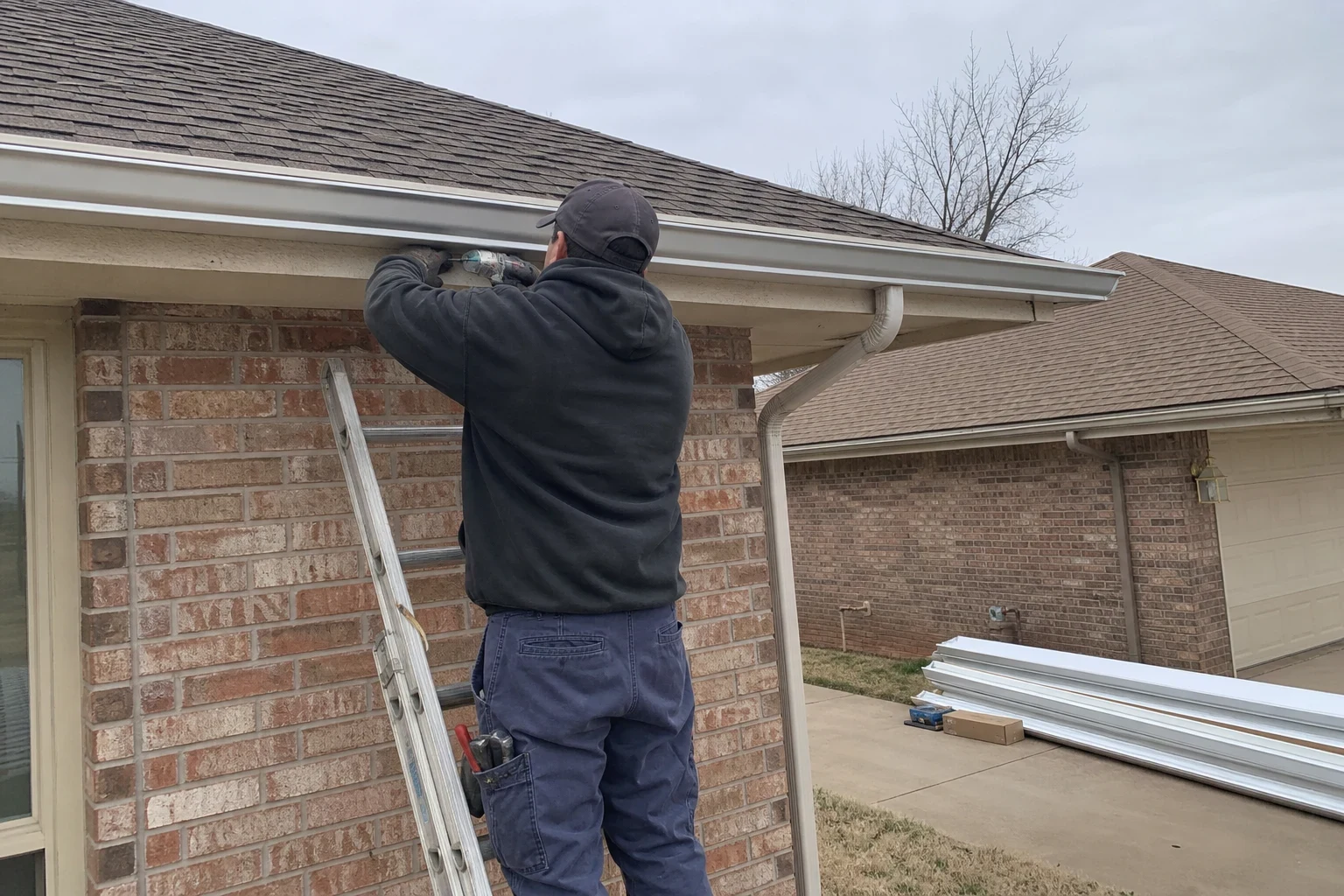
What Gutters Do, and When They Need Attention
A roof sheds a surprising amount of water. Without gutters, that water drops straight off the eaves, splashes dirt onto siding, soaks the soil beside your home and finds its way toward the foundation. Good gutters collect it along the roof edge and send it to a few chosen spots where it can drain off safely.
Most gutter trouble comes from the wrong size for the roof, poor pitch, or hangers that have loosened over time. A gutter that looks fine on a dry afternoon can overflow badly in a hard Oklahoma spring downpour. We look at how the system behaves under real rain, not just how it looks from the driveway.
Sometimes a repair is enough. A loose section can be rehung, a leaking corner resealed, a crushed downspout replaced. Other times the gutters are undersized or worn through, and new runs make more sense. We will tell you which one you are looking at and show you why.
What Our Gutter Work Includes
- Continuous aluminum runs
- We form gutters on site in one continuous piece for each straight roof edge. With no joints along the run, there are far fewer places for leaks to start. Corners and end caps are sealed by hand.
- Sizing matched to your roof
- Standard 5-inch gutters suit many homes, but large or steep roof sections can overwhelm them. Where the water volume calls for it, we recommend 6-inch gutters and larger downspouts, and we explain the difference in plain terms.
- Downspouts placed with a plan
- We position downspouts so water leaves your home where the ground can take it, then add extensions or splash blocks to carry it clear of the foundation and walkways.
- Hidden hangers and proper pitch
- Gutters are hung with hidden hangers fastened into solid wood at close, even spacing, and set with a slight, steady slope toward each downspout. Too little slope leaves standing water, while too much looks crooked and can still overflow.
- Fascia and roof edge check
- Before new gutters go up, we check the fascia board and drip edge behind them. Soft or rotted wood gets pointed out and addressed first, because a gutter is only as secure as what it is fastened to.
Signs Your Gutters Need Work
Water spilling over the front
When rain sheets over the outer lip during a steady storm, the cause is usually a clog, a gutter too small for the roof or a slope running the wrong direction. We sort out which one it is before suggesting anything.
Dipping or leaning runs
Low spots between hangers, or a run tilting out from the fascia, mean the fasteners have loosened. Every storm adds weight from water and leaves, and the gap tends to grow.
Stains or peeling paint below
Dark streaks on siding, peeling paint on the fascia or soft trim wood usually mean water is running behind the gutter instead of into it.
Washed-out soil or pooling near the foundation
Trenches in the flower bed, puddles that linger along the wall or a damp crawlspace point to downspouts that end too close to your home, or to gaps that let water dump in one spot.
Leaking joints and corners
Drips at joints, rust spots on older steel gutters or sealant that has cracked and lifted are signs the system is wearing out. A few spots can be repaired; widespread leaking often means it is time for new runs.
How a Gutter Job Runs
- 1
Walking the roofline first
We go along every roof edge, look over the fascia, see where rain lands today and take a measurement of each run. When possible, we study how water flows toward each corner so the new layout follows its real path.
- 2
Choices laid out before we order
We share what we saw, whether fixing or replacing is the better fit, and the gutter size and downspout spots we would choose. The reasons come in plain English, and the quote comes over the phone.
- 3
The day of the install
We lower the old gutters with care so shingle edges and fascia stay intact. Then new runs are formed, hung, sloped and sealed, and each downspout is secured and given an extension. Most houses are done in a single day.
- 4
Water test and cleanup
We run a hose at the high end of every run and watch the water travel to each downspout without pooling or dripping. Old metal, scraps and fasteners leave with us, and we sweep the lawn for loose screws.
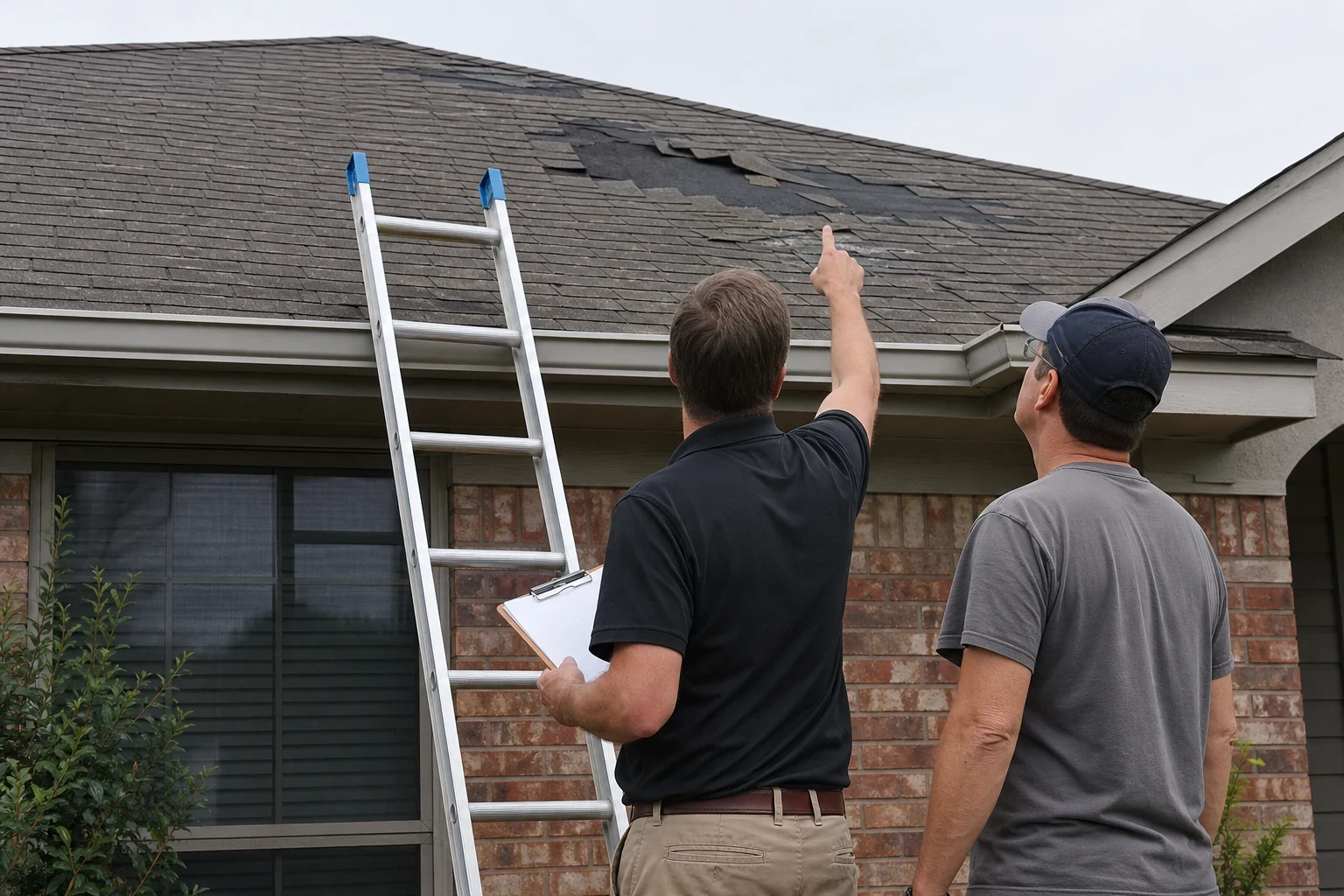
What Shapes the Cost of Gutters
Gutter pricing mostly comes down to how much gutter your home needs and how hard it is to reach. We walk you through each item on the quote so nothing on it is a mystery.
- Linear footage and corners
- Longer roof edges mean more material, and every inside or outside corner adds fabrication and sealing time.
- Gutter and downspout size
- Six-inch gutters and larger downspouts cost more than standard sizes. We only recommend them where the roof sheds enough water to need them.
- Tall walls and tricky ground
- A second story, a slope below the eaves or a narrow strip between houses means more ladder setups and slower going than an open, single-level roofline.
- Fascia condition
- If the wood behind the old gutters is rotted, it needs replacing before new gutters can be fastened securely. We show you any damage we find before including it.
Common Questions About Gutters
Something not covered here? (572) 233-7291
Is it better to fix my gutters or put in new ones?
When the trouble is one loose section, a single leaking corner or a bent downspout, fixing it is usually the sensible choice. If leaks show up at many joints, the metal is rusting through, or the gutters are simply too small for the roof, new runs are the better use of your money. We will tell you which applies and why.
What is the difference between continuous and sectional gutters?
Sectional gutters come in short pieces joined every several feet, and each joint is a possible leak. Continuous gutters are formed in one length for each straight run, so only the corners and ends need sealing. That is why we install continuous aluminum.
Do I need gutter guards?
It depends on what falls on your roof. Homes under trees that drop leaves, seeds or needles can benefit from guards, while homes with open sky above often do fine with regular cleaning. We can explain the trade-offs on your home if you are weighing them.
Can you replace gutters at the same time as a new roof?
Yes, and it often makes sense. During roof replacement the drip edge and fascia are exposed anyway, so fitting new gutters right after keeps the whole roof edge working together.
Will gutter work damage my roof or landscaping?
We take old gutters down carefully to avoid lifting shingle edges, and we keep ladders and materials off planting beds where we can. Debris and old metal leave with us at the end of the job.

Get Your Gutters Working the Way They Should
Tell us what you are seeing when it rains, and we will explain what is likely going on and what the options are. If a closer look is needed, we will set up a visit.